Yuanding Medical product portfolio

Indwelling Drainage Catheters for Percutaneous Fluid and Pus Removal

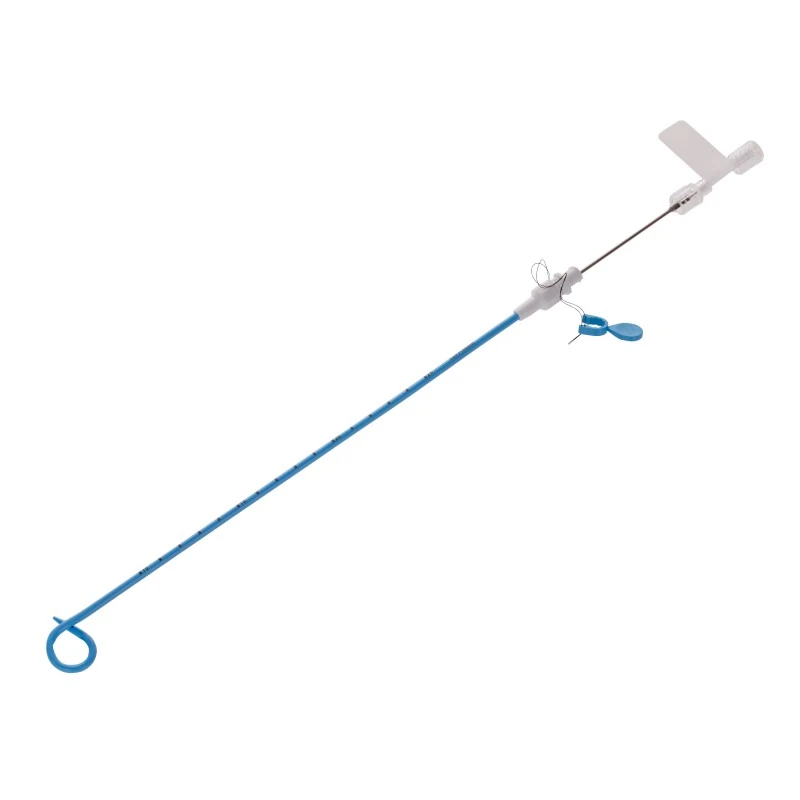
Single-Use Sterile Indwelling Drainage Catheters with Accessories

Single-Use Sterile Indwelling Drainage Catheters with Accessories

Single-use sterile indwelling drainage catheter set, EO sterilized. Used for percutaneous indwelling drainage and irrigation…

View Details

Placement Set Matched to Access Technique

YUA is the standard set for a single-wire approach: catheter, cannula needle, dilator, 18G needle and one 0.035in guide wire. YUD adds three dilators, a coaxial dilator, a 21G needle and a second 0.018in wire for tight or complex access. YUB and YUC are replacement catheters for an existing tract.

Side Holes, Graduations and Fixation

Spiral side holes spread suction over a longer segment, so one blocked hole does not stop drainage. Depth graduations and a radiopaque line let the operator position the tip and confirm it later without a second puncture. The integrated clip holds the catheter at the skin entry, which is where most accidental dislodgements begin.

Clinical Applications Across Specialties

The range covers thoracic drainage for pleural effusion, pneumothorax and empyema; abdominal drainage for ascites and abscess; hepatobiliary drainage including PTCD for obstructive jaundice; renal collection and renal abscess; and skin or soft tissue abscess and cysts. Hepatobiliary, general, thoracic and urology teams, ultrasound and interventional radiology all draw on the same four models.
Product FAQ

Frequently Asked Questions

Answers to common questions about our products, customization and ordering.

The polyurethane is intended for placement under 30 days. It softens in vivo, which reduces irritation to the tract wall, and it is not designed for long-term tunnelled drainage where silicone catheters are usually preferred.
YUA suits a routine single-wire puncture with an 18G needle and one 0.035in guide wire. YUD is the enhanced set for difficult access: three dilators, a coaxial dilator, a 21G needle and an additional 0.018in wire for a two-step technique.
Pleural effusion, pneumothorax and empyema; ascites and abdominal abscess; PTCD and liver abscess; renal fluid collection and renal abscess; and skin abscess or cysts. Placement is guided by ultrasound, fluoroscopy or CT depending on the site.