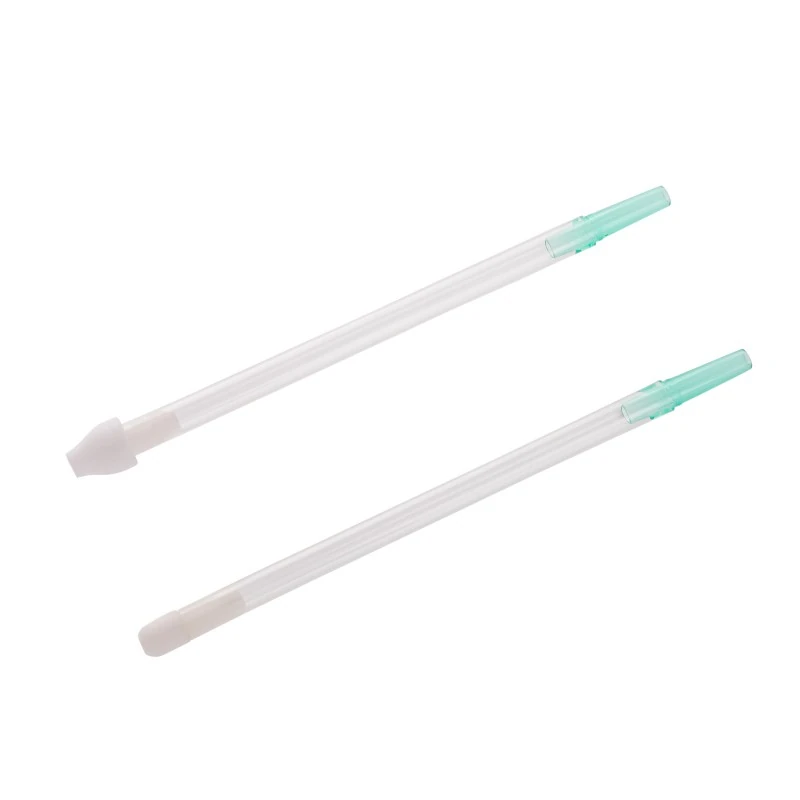
Single-Use Nasal Suction Catheters for Adults and Children
Single-Use Nasal Suction Catheter
This product is a single-use, sterile nasal suction catheter, sterilized by ethylene oxide. It is…
View Details


Vent Hole, Fingertip Control and Mucosal Safety
Suction held on nasal mucosa causes oedema and bleeding. A vent hole breaks the vacuum when the finger lifts, so suction lasts only as long as the nurse intends. The silicone tip flexes against the turbinate instead of scraping it, which matters most in neonates and small infants.
Adult and Paediatric Sizing
Type A in 16cm or 20cm suits adult nasal passages, while Type B in the same lengths is proportioned for children. Length follows the distance from nostril to soft palate: a short catheter does not reach the pharynx, and an overlong one coils in the nasopharynx and blocks.
Departments and Daily Use
Nasal suction is routine in paediatrics for neonates and infants whose congestion interferes with feeding and sleep, in ENT after nasal surgery and during infection, in respiratory and intensive care for patients who cannot clear secretions, and in emergency and anaesthesia when blood or secretions must be cleared during a procedure.
Product FAQ
Frequently Asked Questions
Answers to common questions about our products, customization and ordering.
Type A for adults and Type B for children, each in 16cm and 20cm, and each with or without a vent hole. The silicone tip and tapered PVC body are identical across the range; only the proportions change.
The tip is the part that touches nasal mucosa. Silicone stays soft and flexes against the turbinate, while a rigid tip can scratch the surface and cause bleeding, which is a particular concern in neonates and small infants.
No. It is a single-use device, ethylene oxide sterilized and packed individually. The soft tip loses its shape after the first pass, and reuse carries a cross-infection risk, so a new catheter is used for each suction episode.