
1、Two-step method for selection
Step 1: Select Drainage Bulb Specification Based on Anticipated Drainage Volume
- Anticipated drainage volume < 50 mL: Drainage may be omitted or implemented for a short-term period.
- Anticipated drainage volume 50-100 mL: Small-volume Drainage Bulb (100 mL) is recommended.
- Anticipated drainage volume 100-200 mL: Large-volume Drainage Bulb (200 mL) is recommended.
- Anticipated drainage volume > 200 mL: Combined use of Drainage Bulb plus drainage bag is recommended.
Step 2: Select Drainage Catheter French Size Based on Wound Characteristics
- Superficial minor wounds (e.g. post-thyroidectomy and post-mastectomy incisions): 8 Fr or 10 Fr drainage catheter is recommended.
- Wounds with moderate drainage output (e.g. subcutaneous bleeding of abdominal incisions, abdominal wall subcutaneous drainage): 12 Fr drainage catheter is recommended.
- Large wounds or wounds producing viscous drainage fluid (e.g. after flap reconstruction, high risk of fat liquefaction): 14 Fr or 16 Fr drainage catheter is recommended.
Note: The above French (Fr) values serve as general clinical references. The final selection of drainage catheter specifications shall be comprehensively determined by attending clinicians according to individual patient conditions, surgical procedures, anatomical features and drainage objectives.
Our company provides six catheter French sizes: 14 Fr, 16 Fr, 18 Fr, 20 Fr, 22 Fr and 24 Fr.
Drainage bulb are available in 100 mL and 200 mL capacities;
Drainage bags are offered in 500 mL and 800 mL.
Configurations can be combined to meet clinical requirements.
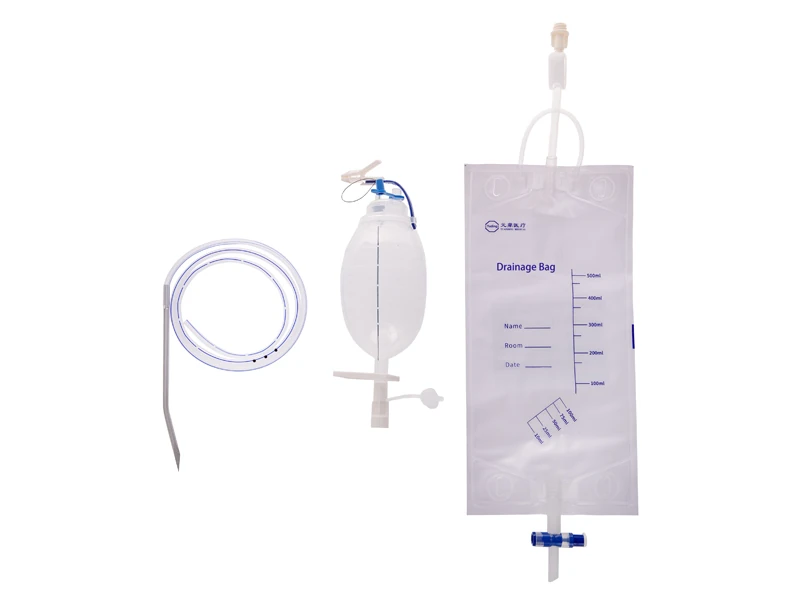
2、Four Components of Yuanding Surgical Drainage Catheter Set
| Component | Functional Description |
| Drainage Catheter | Cross-groove design, for draining effusion, exudate or gas from the wound cavity to outside the human body. |
| Drainage bulb (Negative-pressure Bulb) | Generates sustained negative pressure for active drainage after manual compression and evacuation. |
| Drainage Bag | Collects drainage fluid with anti-reflux feature. Must be placed below the level of the wound drainage outlet at all times. |
| Guiding Needle | Facilitates percutaneous puncture for guiding placement of the drainage catheter; not for indwelling inside the body. |
Intended Use: This product is intended for draining effusion, exudate and gas from superficial wounds and postoperative surgical incisions.
3、Evidence-based Key Points for Drainage Catheter Management
Latest systematic reviews and meta-analyses indicate that drainage catheter management should cover placement indications, intraoperative placement principles, routine maintenance, obstruction management, infection prevention, removal timing and drainage fluid monitoring. Early removal is associated with lower infection rates and shortened hospital stay when 24-hour drainage output falls below 50 mL, provided the drainage is non-biliary and non-haemorrhagic. Under the ERAS protocol, drainage catheters shall be removed as early as clinically feasible.
4、Next Steps
Do you need customized configurations matched to departmental profiles and surgical volumes? Contact us for selection advice and sample evaluation!